
Electric cars are speeding up in charging, faster at charging, and travelling farther than before. The world of automobiles is evolving quickly, and the battery technology is at the forefront of this change. If you're looking for an SUV with a family, or just a short city trip looking into battery electric vehicle updates can help you select the ideal vehicle for daily use. This guide explains every important advancement in battery technology for electric vehicles in plain language and lets you see the direction that electric vehicles are taking.
What Are The Latest Battery Electric Vehicle Updates?
The battery in electric cars is becoming smaller, more secure, and more efficient. Automobile manufacturers are now using better material like solid state components as well as silicon anodes to store larger amounts of energy within smaller areas.
Here are the top changes that drivers are experiencing right now:
- Solid-State Power Switching liquid power to solid layers helps make batteries more secure and lighter.
- Ultra-Fast Charging The latest designs for packs allow the user to increase their charge by hundreds of miles within 15 minutes.
- Extreme Weather Performance Modern sodium-ion as well as hybrid cells keep their energy even in frigid temperatures.
Why Is EV Battery Technology Improving?
Batteries are constantly improved due to the fact that drivers are looking for three primary aspects: more driving distance as well as faster charging time and less expensive car costs. Engineers strive to address these issues by altering the way batteries are made.
How Is Battery Technology Improving EV Performance?
A better chemistry will directly enhance the way your car handles. In the event that batteries store more power without adding weight cars accelerate more quickly and turns with more ease.
"We are seeing a major shift from heavy, slow-charging packs to light, high-density cells. This makes modern electric cars more efficient and far more reliable for everyday long-distance travel." -- Dr. Aris Thorne, Automotive Battery Systems Researcher
Read Also: Electric Car Technology Updates 2026: The Future of Driving
Top 10 Battery Electric Vehicle Updates You Need to Know
These are the top ten thrilling technological battery-powered vehicle improvements that are changing cars of in the present:
1. Rise of Solid-State Energy
The most comprehensive electric vehicle battery news and solid-state developments show that solid electrolyte cells are now moving out of laboratories for research to testing track vehicles. The packs are able to eliminate liquids that can ignite and are therefore extremely safe.
2. Extreme Range Capabilities
The current cell density is between 350 and 400 Wh/kg modern battery electrical vehicle ranges permit drivers to drive over 600 miles (1,000 kilometers) with just one charge.
3. Breakthrough Silicon Anodes
The incorporation of silicon in the anodes of batteries allows cells to take more power. It reduces charging times to 11-15 minutes for the public charging stations with high power.
4. Affordable Sodium-Ion Options
The sodium-ion packs make use of cheap and abundant salts instead of costly lithium. They lower the cost of low-cost city cars, and also provides excellent performance in winter conditions.
5. Advanced Safety Features
The latest battery security updates comprise smart sensors within cells that track heat and continuously. They completely eliminate any thermal risks.
6. Dry Electrode Manufacturing
The top brands are embracing dry coating processes. It reduces energy consumption in factories by as much as 30%, while reducing total costs for car manufacturing.
7. Global Charging Network Expansion
Public charging stations are upgrading to 600 and 400 kW power outputs to match speedier charging times that modern battery packs offer.
8. LFP Battery Dominance
Lithium Iron Phosphate (LFP) packs have become standard equipment in vehicles due to the fact that they can last many thousands of charge cycles and without loosing their strength.
9. Wireless Charging Support
Induction plates that are factory-installed permit charging your car easily by parking on the floor at home.
10. Better Recycling Systems
Modern recycling facilities are able to recuperate more than 95 percent of the raw material from batteries that were used for the construction of new cells.
Read Also: How to Invest in Future Mobility Car Designs Trends
Regional Industry Focus: Global & Local Progress
Progress in battery development is taking place all over the world, however different regions are focused on different goals.
Battery Electric Vehicle Updates Tesla
The battery electric vehicle update the Tesla plan to focus on the mass production of 4680 dry cathode cells in Texas. This method makes batteries cheaper to manufacture while maintaining vehicle efficiency high.
Battery Electric Vehicle Updates Europe
It is believed that the batteries-powered vehicle Europe's market pushing for green building standards, as well as super-fast highway charging. European companies are launching the silicon-anode sport models which range from charging 10 up to 80% of the charge in less than 11 minutes.
Battery Electric Vehicle vs Hydrogen Car
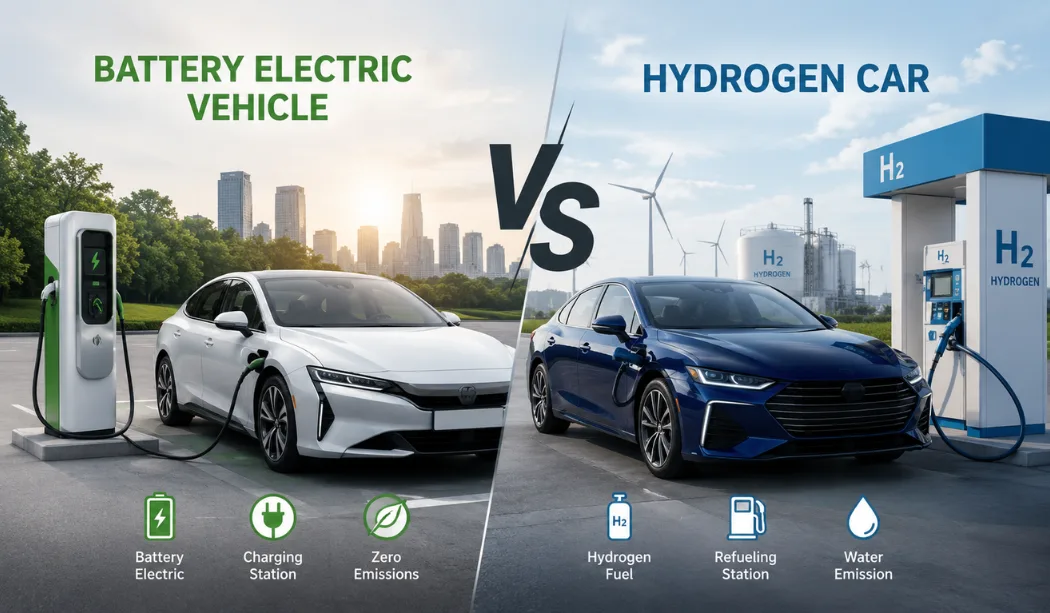
In the comparison of the comparison of a battery electric car versus a hydrogen cars batteries win in everyday comfort and charge accessibility. Plug in the electric car wherever where there's power. On the other hand, hydrogen cars need specialized fueling stations, which are still scarce.
EV Charging at Home vs Public Charging
The decision between electric vehicle charging at your home and public charging will depend on your current routine
- Home charging (Level 1 and level 2.): Plugs in at night and you can sleep. It's the cheapest and most effective method to ensure your vehicle is up and running every day.
- Public Charging (Level 3 DC Fast Chargers): Perfect for lengthy roads, allowing 100-200 miles of range within 15 minutes.
Read Also: 2026 Electric Car Range Improvement News: 1,500 KM Breakthroughs
Battery Electric Vehicle Future Trends
In the future, battery electric vehicle the future will suggest lower car costs, more lightweight vehicles as well as longer battery life. With the sodium-ion and solid state technologies about to become mass-produced, purchasing electric cars will eventually be the same price as gas-powered cars.
Frequently Asked Questions
What is the latest electric car battery news on solid-state packs?
Solid-state batteries are now being tested in testing on the road in real time. They provide over 600 miles in range, and no fire risk due to the removal of the liquid chemical.
How long do modern battery electric vehicle packs last?
Modern EV batteries are designed for 12 to 15 years or more than 200 000 miles before they lose all of the capacity for storage.
Is home charging cheaper than public charging?
It is true that charging your home at standard rates of residential electricity generally is 50% to 70% less expensive than paying for high-speed public station.