
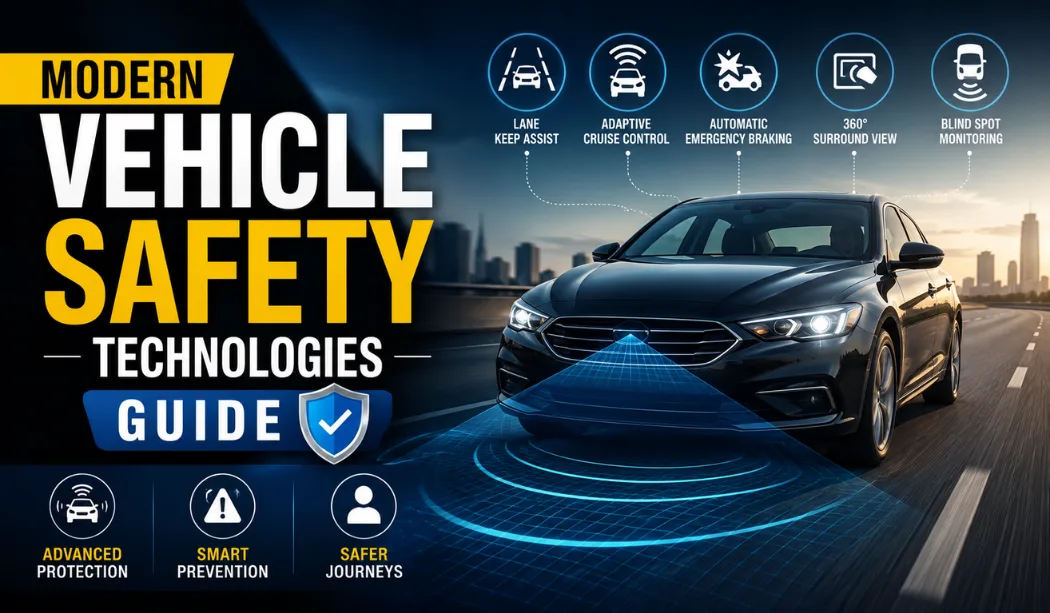
The road you drive on feels entirely different from what it was a couple of years back. When you enter the latest vehicle and you're no longer operating the machine that is made of steel and rubber. Instead, you're entering a high-tech vehicle that is a computer with wheels. In order to help you navigate the sweeping changes ahead the guide Modern Vehicle Safety Technologies Guide can guide you through the advanced devices designed to safeguard yourself, your family and all others in the road.
What is the Safest Car Technology Available Today?
As people take a look at brand new automobiles, they frequently think: What is the most secure car technology that is available? The answer is something known as Autonomous Emergency Braking (also known as AEB). This can be described as having a second pair of eyes, which never gets exhausted.
The system employs radar and intelligent cameras located in rear of your vehicle. The system continuously measures the distance between your vehicle and the car in front of it. If the vehicle in front abruptly stops it will emit an alarm sound to alert that you. If you don't engage the brakes on time, the vehicle will stop automatically.
Based on research by groups such as those of Insurance Institute for Highway Safety (IIHS) the easy tool can prevent hundreds of rear-end accidents each year. It's among the most effective safety features available to first-time car buyers since it is able to act immediately in the event of a distracted driver.
Modern Vehicle Safety Technologies Guide
Why Should You Trust Modern Vehicle Safety Systems?
It's natural to ask: Why should you put your faith in modern safety devices for vehicles? After all, the idea of letting computers control the steering or brakes can seem a little intimidating initially. Yet, these systems are supported by billions of hours of actual-world tests.
Take these tools in the perspective of useful partners and not as replacements to your driving. They don't get tired They don't stare at phones or mobiles and can be seen even in the midst of heavy rain or dense fog. They're built to safeguard your eyes from human error.
Read also: Advanced Engine Performance Features: The Ultimate Guide to Speed
Top 10 Modern Vehicle Safety Technologies Guide
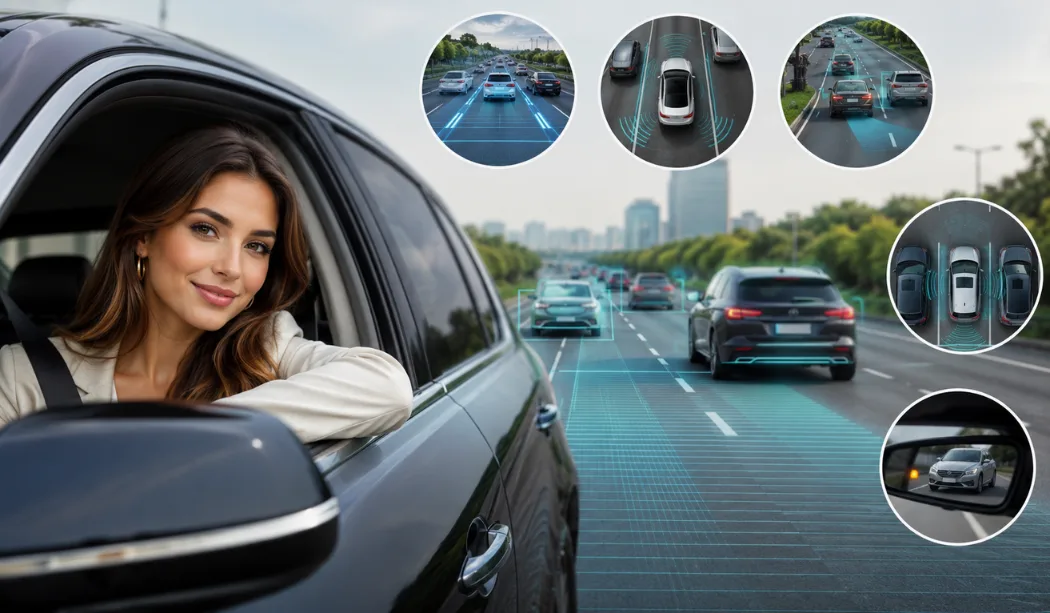
In order to help you determine what you should look for when buying an automobile for your next car, here's a simple current car's security specifications checklist. The ten most significant tools that are shaking the auto industry at the moment:
- Forward Collision Warn (FCW ): It is a watchful eye on the road ahead, and informs you that you're getting close to a vehicle.
- Lane Departure Warn (LDW ): This device uses cameras to scan for lines that are painted along the roadway. If you drive off without the turning signal, the system makes a sound on the wheel of your car.
- Lane-Keeping Assist (LKA ): A one step ahead of warnings, this feature softly guides your car towards the center of the lane in case you begin to wander out of the lane.
- Blind Spot Monitor (BSM ): Tiny radar sensors monitor the places that you can't see from your mirrors to the sides. If you see a vehicle close to you, a blinking light appears on the mirror in order to inform you that it's not safe to switch the lane.
- Affinity cruise Control (ACC ): Traditional cruise control holds your speed at a certain level. The ACC adaptive cruise control alters the speed of your car automatically, ensuring your distance safe from cars ahead.
- Rear Cross-Traffic Warning: If you pull out of the parking space in a congested area The system monitors the road in front of you for vehicles that could be coming up behind you, or pedestrians.
- Driver Monitoring Systems (DMS ): If you close your eyes or your eyes turn away to the roadway for a long time and the car screams to awaken you or remind you to stop for a moment.
- Automated High Beams clever lights activate the high beams for dark roads. However, they switch to low beams at the exact moment they spot oncoming headlights to make sure you're not dazzling motorists.
- Pedestrian as well as Cyclists Detection This program specifically searches for tiny shapes such as those of those who are walking, riding bikes or even people on bicycles even at night.
- Surround View Cameras offer a bird's eye perspective of the entire car from your dashboard display, which makes parking spaces that are tight very easy to manage.
How Can Safety Technologies Reduce Road Accidents?
It is possible to ask: How can safety technology reduce the risk of road accidents? The secret lies in the speed. The human brain requires approximately 1.5 seconds to identify an hazard, then press the brake. The AI-powered safety technology for vehicles system is able to detect an hazard and activate the brakes within milliseconds. Through reducing the response time, vehicles can complete stop before a collision occurs, or at the very minimum slow down so that injuries are not severe.
The Power of Lane Tracking
In the case of the advanced driver assistance system guide the topic of lane management the main subject. There are a lot of advantages of lane departure warning systems and lane-keep assist.
In long, monotonous road trips, it's common for drivers' minds to wander. One small stray over the yellow line may result in serious injury. The tracking systems function as virtual barriers, keeping your exact location to be.
Advanced Tech: AI, EVs, and Night Vision
AI-Powered Vehicle Safety Technologies
Autos are getting more intelligent thanks to Artificial Intelligence. Future future of car safety system is dependent on the ability of computers to are able to learn. Instead of seeing the item, AI can guess what the object is likely to do in the future. As an example, if AI observes a ball bounce across the road and it is sure that the child could run away in the future, so it sets the brakes prior to the time the child is even seen.
Safety Technologies in Electric Vehicles
Electric vehicles have unique design requirements. Since they have large batteries, safety technologies in electric cars are focused on securing these batteries when they are involved in a crash. Electric vehicles are constructed with extremely strong steel cages that surround the battery cells in order to stop the possibility of fires. They also produce artificial sounds when they are moving at slow speeds, so pedestrians will be able to detect them because electric motors operate in a completely quiet manner.
Night Vision Technology in Vehicles
The driving in darkness is challenging, but night vision technology within cars alters everything. Utilizing thermal imaging cameras, your car will display the heat map of the dashboard. It lets you view the presence of deer, people, or invisible obstacles that are many miles beyond the distance that your normal headlights are able to reach.
Read also: Essential Car Features for Daily Driving 2026
Security Technology Comparatives New vs. Old. new
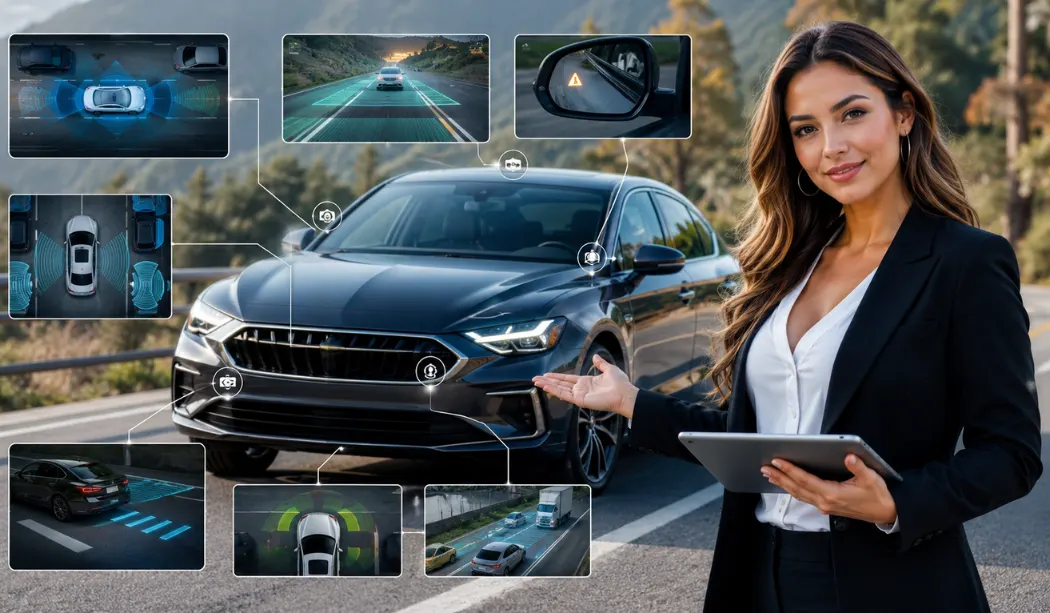
If you look at safety Technology Comparatives, it's easy to realize the progress we've made. In the past, cars relied in "passive safety." That meant things like seatbelts or airbags and airbags, which were only used to protect your in the event of the event of a crash. Modern automobiles are focused upon "active safety." They are made to ensure that crashes don't happen initially.
| Feature Type | Old Cars (Passive) | Modern Cars (Active) |
| Braking | Regular brakes | Automatic Emergency Braking |
| Visibility | Standard mirrors | Blind-Spot Sensors & 360 Cameras |
| Steering | You are the sole driver | Lane Keeping Assist Support |
| Lights | Manual high beams | Smart Glare-Free Headlights |
Cybersecurity and the Future of Cars
Since cars can connect with the internet in order to receive update software, a brand new issue comes up. That's where automobile cybersecurity as well as security become a factor. Automotive manufacturers are now using top-of-the-line cybersecurity teams that encrypt the computers in their cars. This means that hackers are unable to hinder your brakes, steering or map while driving.
"Safety is no longer just about metal crinkle zones. It is about sensor accuracy and software security working perfectly together." -- David Harkey, Insurance Institute for Highway Safety (IIHS) President
Frequently Asked Questions
What are the distinctive characteristics of vehicles in terms of safety currently?
Cars with unique features present day include such things as the Safe Exit Assist. This function locks the doors to the rear when it detects the presence of a car or bicycle from behind, stopping the passengers from entering danger.
Are these functions functional during bad conditions?
A heavy downpour, snowfall or a thick layer of mud could often cover the camera lens as well as radar sensors. If this occurs you will typically have a tiny warning light on your dashboard, advising you to wash your sensors.
Do I have the option of turning these security feature off?
The majority of vehicles permit the user to disable systems such as Lane Keeping Assist through the settings menu displayed on the screen. However, it is strongly recommended that you maintain them on for your protection.