

To calculate a car's on-road price in 2026, add the MSRP to your state’s sales tax (7%–9% avg.), registration fees ($400–$1,200), and dealer documentation charges ($150–$995). In 2026, the final "Out-the-Door" price typically exceeds the sticker price by 10.5% to 14% due to new weight-based EV taxes and inflationary fee adjustments.
What is Car Comparison With On Road Price?
A car comparison with on road price is a comprehensive financial audit of a vehicle's "Out-the-Door" (OTD) total. While the MSRP is merely a manufacturer’s suggestion, the on-road price is the legally binding amount you must pay to secure ownership.
In the April 2026 market, this figure includes the base price, destination charges, state sales tax, title/license fees, and dealer-specific documentation (doc) fees. By comparing these totals side-by-side, you move beyond marketing fluff and evaluate vehicles based on their actual impact on your bank account.
Why is Car Comparison With On Road Price critical in 2026?
Transparency in the automotive industry has hit a decade-low. In early 2026, the Federal Trade Commission (FTC) issued warning letters to nearly 100 dealer groups for deceptive pricing. Many dealers still exclude mandatory "add-ons"—like ceramic coatings or VIN etching—from their online quotes.
Furthermore, the federal EV tax credit landscape shifted dramatically on September 30, 2025. Most new 2026 electric vehicles no longer qualify for the standard $7,500 rebate. Without an on-road comparison, you might buy an EV expecting a discount that no longer exists, while a hybrid might actually be cheaper once state-specific point-of-sale rebates are applied.
Key benefits of total cost comparison
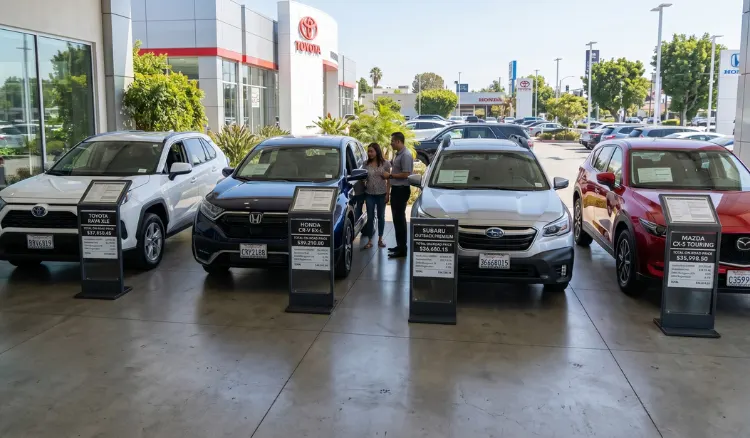
-
Financial Integrity: It ensures your monthly payment is based on the $54,000 OTD price, not a misleading $48,000 MSRP.
-
Negotiation Power: In 2026, the "CARS Rule" spirit lives on; focusing on the total OTD price prevents dealers from hiding fees in "financing-only" discounts.
-
Accurate Tech Evaluation: Many 2026 models feature subscription-based software. A true comparison factors in these "on-road" operational costs.
How to use a car comparison tool effectively
To get an expert-level result, begin with a best car comparison tool like Edmunds' "True Cost to Own" or Kelley Blue Book. However, you must manually verify your state’s specific 2026 tax rate. For instance, while Oregon remains at 0%, Florida and California have seen local surtax increases this year.
Next, identify the "Doc Fee" cap. In Ohio, for example, the legal maximum for documentation fees was adjusted to $398 for 2026 based on the Consumer Price Index. In contrast, Florida dealers often charge over $950. Always add these manually to your tool's output to get a "clean" comparison.
Real-world example: SUV Comparison
Let’s look at the SUV car comparison with on road price in USA for two top-tier 2026 models. A gas-powered SUV with an MSRP of $45,000 in Texas will incur a 6.25% sales tax ($2,812.50), a $250 registration fee, and an average $150 doc fee. Total: $48,212.50.
Compare this to its Hybrid counterpart at $47,500 MSRP. While the sticker is $2,500 higher, some states offer immediate rebates of $1,500 at registration for hybrids. When you run the math, the "on-road" gap narrows to less than $1,000, which is often recouped in fuel savings within the first eight months of ownership.
Common mistakes and 2026 myths
The most dangerous myth is that "Point-of-Sale" EV credits are still universal. As of late 2025/early 2026, the federal 30D credit has expired for the majority of new acquisitions. Relying on "Net Price" advertising is a major mistake; always ask for the gross on-road price first.
Another error is ignoring weight-based registration fees. States like Arizona and Iowa now calculate fees based on Gross Vehicle Weight (GVW). Since 2026 EVs and large SUVs are significantly heavier, your registration could be $300 more expensive than a sedan’s, directly affecting your on-road total.
Expert insights: The "Dealer Fee" crackdown
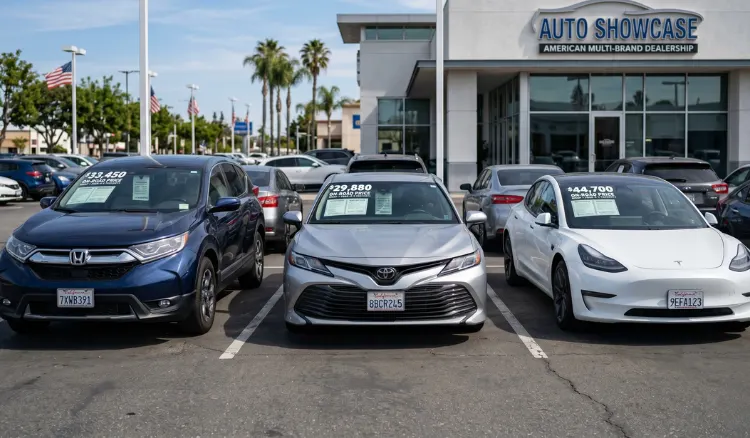
In March 2026, the FTC and state attorneys general in Connecticut and beyond began aggressive enforcement against "junk fees." This means you now have more legal backing to challenge pre-printed "Dealer Prep" or "Market Adjustment" charges.
Experts suggest that a car comparison 2026 models USA should always include a request for a "Pro-forma Invoice" before visiting. If a dealer refuses to provide a line-item on-road price via email, it’s a red flag that they are hiding high-margin add-ons.
Who should consider this?
-
EV Shifting Buyers: Those trying to navigate the post-tax-credit era of 2026.
-
First-Time Drivers: Who may not realize that "Title and License" can cost as much as a down payment.
-
Cross-State Shoppers: Buyers near state lines (e.g., Vancouver, WA vs. Portland, OR) must calculate on-road costs based on where they live, not where they buy.
Pros and Cons of On-Road Comparing
| Pros | Cons |
| Total Transparency: No surprises in the "F&I" (Finance) office. | Time Intensive: Requires searching state-specific 2026 fee tables. |
| Fair Tech Evaluation: Compares gas vs. electric on equal ground. | Volatility: Sales tax rates can change mid-year at the local level. |
| Budget Safety: Prevents "negative equity" from day one. | Dealer Resistance: Some dealers prefer to hide behind "monthly payments." |
FAQs
How much extra is the on-road price for a car in 2026?
Expect to pay between 11% and 14% over the MSRP. For a $50,000 car, your "Out-the-Door" total will likely land between $55,500 and $57,000.
Why is the on-road price so much higher than the sticker?
It combines the base price with non-negotiable government fees (sales tax, title, weight-based registration) and dealer-specific administrative costs (doc fees).
What is the most accurate car comparison tool for 2026?
The Consumer Reports Car Value tool and Edmunds TCO are best because they integrate 2026 depreciation and insurance data into the on-road price.
Final Verdict
In 2026, a car comparison with on road price is no longer optional—it is a financial necessity. With federal incentives in flux and state fees rising, the MSRP has become a distraction. By focusing on the "Out-the-Door" total, you gain the clarity needed to make a high-integrity purchase. Whether you are eyeing a low-cost compact or a luxury SUV, the on-road price is the only number that dictates your true financial future.