
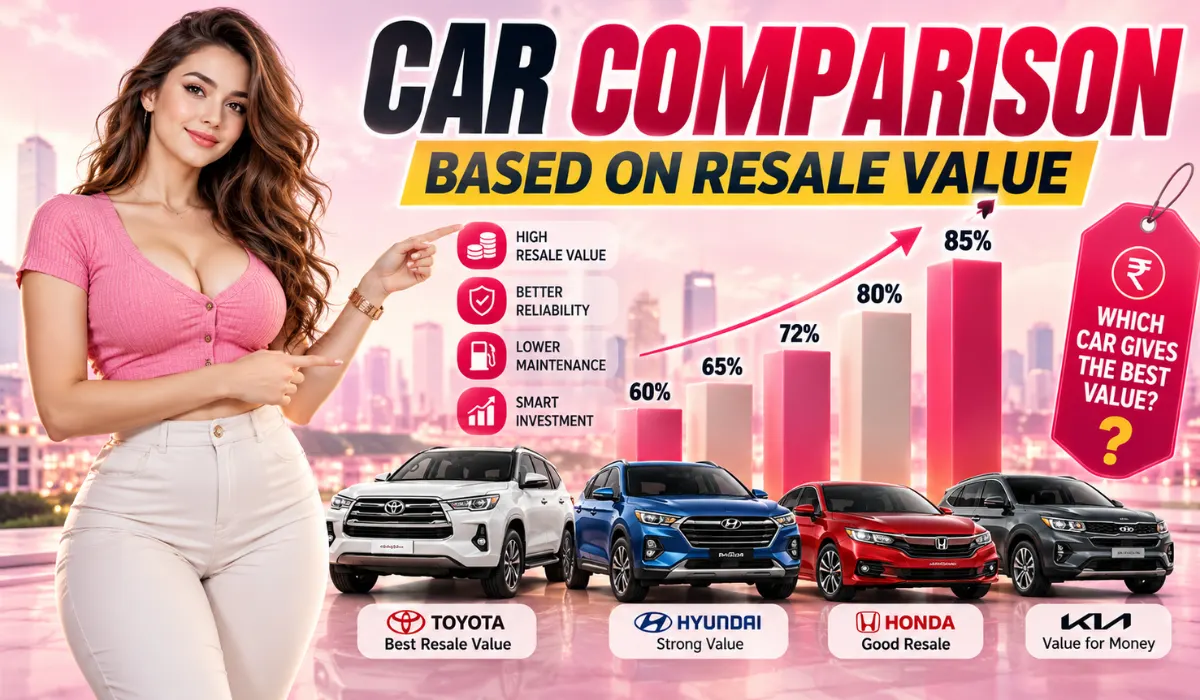
When I bought my first car years ago, I only looked at the shiny paint, the cozy seats, and the new car smell. I did not think about tomorrow. But guess what? A few years later, when I wanted to upgrade, I got a huge shock. My car had lost more than half its value! That is when I learned my most expensive lesson in car ownership. A car is not just a machine that gets you from point A to point B; it is a financial asset that starts losing value the second you drive it out of the showroom. If you want to protect your hard-earned money, you need to master Car Comparison Based On Resale Value. Smart buyers look past the initial price tag and evaluate what the vehicle will actually be worth three to five years down the line. Throughout this guide, I will share insider tips, real-world experience, and data-driven insights to help you choose a vehicle that holds onto its cash value. Let us dive in and explore how you can make your next car purchase a brilliant investment.
What are the best cars based on resale value?
When people ask, What are the best cars based on resale value?, they usually want a straightforward answer: which brand or model will give me the highest return when I sell it? From my years of tracking automotive markets, I have noticed that reliability, brand trust, and low maintenance costs dictate everything.
Mass-market brands that offer bulletproof reliability always win the resale game. For example, brands like Toyota and Maruti Suzuki consistently dominate the charts. When a used car buyer goes to the market, they want peace of mind. They do not want a car that breaks down every week. Therefore, vehicles with simple mechanics, cheap spare parts, and high demand keep their prices high.
- High Demand Models: Hatchbacks and compact SUVs with great fuel efficiency.
- Diesel vs. Petrol: Petrol models often retain stable values in regions with strict age limits on diesel vehicles.
- Brand Perception: Brands known for lasting decades command higher used prices.
Read Also: Car Comparison By Interior Space And Comfort: Find Your Best Ride
Why do some cars have higher resale value than others?

Have you ever wondered Why do some cars have higher resale value than others? It all boils down to supply, demand, and public perception. The moment you register a new vehicle, it suffers from immediate depreciation. However, the speed of that drop varies wildly from one car to another. Luxury cars, for instance, drop in price like a stone. A high-end European sedan might lose up to forty to fifty percent of its value in just three years. Why? Because second-hand buyers fear expensive repair bills and costly electronic failures. On the other hand, a reliable family hatchback might only lose fifteen to twenty percent over the same period.
"Depreciation is your biggest hidden cost of car ownership. Choosing a car with strong market demand acts as a financial cushion when it is time to sell." — Automotive Market Analyst
Top 10 Car Comparison Based On Resale Value
Let us get into the exact data. Conducting a Top 10 Car Comparison Based On Resale Value helps us see clear patterns across different segments. Below is a breakdown of how popular vehicle classes stack up in terms of value retention after three years of ownership.
| Rank | Vehicle Segment / Model Type | Average 3-Year Resale Retention | Key Market Driver |
| 1 | Full-Size SUVs (e.g., Toyota Fortuner) | 70% – 75% | High social status, rugged build, unstoppable demand |
| 2 | Compact SUVs (e.g., Hyundai Creta, Kia Seltos) | 65% – 70% | Massive popularity, feature-rich cabins |
| 3 | Hatchbacks (e.g., Maruti Swift) | 65% – 70% | Exceptional fuel economy, low maintenance |
| 4 | Compact Sedans (e.g., Maruti Dzire) | 62% – 68% | Fleet and family favorite, cheap parts |
| 5 | Hybrid Vehicles | 60% – 65% | High fuel efficiency, future-proof urban compliance |
| 6 | Mid-Size Sedans | 50% – 58% | Niche market shift toward SUVs |
| 7 | Entry-Level Electric Vehicles | 45% – 55% | Rapid battery tech changes |
| 8 | European Sedans / Hatchbacks | 45% – 52% | Higher service costs worry second-hand buyers |
| 9 | Luxury Entry Sedans | 40% – 50% | High initial cost, steep early-year drops |
| 10 | Exotic / Niche Sports Cars | 35% – 45% | Very small pool of secondary buyers |
As you can see, rugged utility vehicles and practical city cars retain their value far better than complex luxury machines.
How can you choose a car with better long-term resale value?
If you want to protect your wallet, you must be proactive. Learning How can you choose a car with better long-term resale value? saves you thousands of dollars down the road. When I advise my friends on buying a car, I tell them to look at three golden rules: color choice, transmission type, and service history.
Neutral colors like white, silver, and grey always sell faster than bright yellow or purple because they appeal to a wider audience. Furthermore, automatic transmissions are becoming more popular than manuals in urban centers, making them easier to flip later.
- Maintain Service Records: Always service your car at authorized service centers. A stamped service booklet builds instant trust with a used car buyer.
- Keep Mileage Low: Average driving keeps wear and tear minimal. High mileage is the number one enemy of a good resale price.
- Protect the Exterior: Keep your car free of major dents and scratches. First impressions matter immensely in the used car market.
Read Also: Hybrid Vs Electric Car Comparison: Save Money And Drive Smarter
Future-Proofing Your Garage: Best cars to buy for future resale value

Looking ahead means anticipating what tomorrow's buyers will want. If you are eyeing the Best cars to buy for future resale value, you need to watch market trends closely. Hybrid cars, for instance, are experiencing a massive surge because they offer great fuel economy without range anxiety.
On the flip side, early-generation electric vehicles face steeper drops because battery technology improves so quickly every single year. A used car buyer would rather save up for a brand-new EV with double the range than buy an older model with a degraded battery pack. Sticking to proven hybrid technology or high-demand petrol compact SUVs is usually the safest bet for future returns.
Vehicle resale price comparison and residual value
To understand the big picture, a thorough Vehicle resale price comparison and Vehicle residual value comparison must be performed using empirical data. Residual value refers to the predicted value of a vehicle at the end of a specific loan or lease term.
When lenders calculate your monthly loan payments, they look closely at residual values. A car with a high residual value means lower monthly depreciation, which often translates to better loan terms. Always check independent automotive valuation guides before signing financial paperwork to see how your chosen model performs over a 36-month timeline.
Numbers Don't Lie: Car depreciation by model and year
Tracking Car depreciation by model and year reveals exact patterns of wealth loss. Typically, a brand-new car loses about 10% to 15% of its value the moment it crosses the showroom floor. Over the first year, it can shed up to 20% to 25%.
After year three, the depreciation curve flattens out significantly. This is why buying a three-year-old pre-owned car is often considered the smartest financial hack—the previous owner took the massive initial hit, leaving you with a reliable vehicle that holds steady value.
Analyzing Percentages: Car resale value retention percentage
Evaluating the Car resale value retention percentage allows us to rank brands objectively. Retention percentage is calculated by dividing the current resale price by the original purchase price, multiplied by 100.
- Top Tier Brands: Retain 65% to 75% of their value after 3 years.
- Mid Tier Brands: Retain 50% to 60% of their value after 3 years.
- Budget / Niche Tier: Retain 35% to 48% of their value after 3 years.
Knowing these percentages keeps your expectations realistic when you finally decide to list your vehicle for sale.
Vehicle ownership cost comparison
When reviewing a Vehicle ownership cost comparison, resale value is the hidden hero. Many buyers only look at fuel efficiency and insurance costs. However, total cost of ownership equals:
$$\text{Total Cost} = \text{Purchase Price} + \text{Maintenance} + \text{Fuel} - \text{Resale Value}$$
If car A costs more upfront but sells for a much higher price later, its total ownership cost can easily be lower than a cheap car that loses all its value. Always calculate the net difference before making your final choice.
Maruti Suzuki resale value comparison and Skoda car resale value comparison
Let us look at two popular mass-market and European brands to understand market dynamics through a Maruti Suzuki resale value comparison and a Skoda car resale value comparison.
Maruti Suzuki cars are famous for their widespread service networks and affordable spare parts. Because anyone can fix them anywhere in the country, demand for used Maruti cars remains sky-high. This translates to top-tier resale value retention.
On the other hand, conducting a Skoda car resale value comparison reveals a different story. Skoda builds incredible European sedans and SUVs with phenomenal build quality, plush driving dynamics, and stunning safety features. However, used car buyers often worry about higher maintenance costs and electronic upkeep. Consequently, Skoda cars experience faster depreciation during the first few years compared to their mass-market Japanese or domestic competitors, though they offer fantastic value if bought secondhand.
Vehicle resale price prediction and certified pre-owned options
Modern technology has made Vehicle resale price prediction much more accurate. Advanced algorithms analyze historical transactions, seasonal market trends, and regional demand to forecast prices.
Furthermore, buying or selling through a Certified pre-owned car valuation program adds an extra layer of security. Certified pre-owned cars undergo strict multi-point inspections and come with manufacturer-backed warranties. This gives second-hand buyers total confidence, allowing sellers to command higher prices than private backyard sales.
Read Also: Manual Vs Automatic Car Comparison: Which Is Best in 2026
Expert Opinions and Industry Insights
To give you a well-rounded perspective, let us look at what leading automotive authorities say about vehicle economics:
"The smartest car purchase is rarely the cheapest one on day one. It is the vehicle that retains its structural and market integrity over five years of active use." — Senior Automotive Journalist & Fleet Manager
Industry experts consistently emphasize that regular maintenance, clean documentation, and choosing high-demand segments eliminate the sting of vehicle depreciation.
Frequently Asked Questions
What is the ideal time to sell a car to minimize financial loss?
The ideal window is typically between 3 to 4 years of ownership. By this time, the steepest part of the depreciation curve is complete, and the car is still modern enough to attract buyers looking for reliable used vehicles without out-of-warranty repair fears.
Do electric cars have worse resale value than petrol cars?
Yes, generally speaking. Rapid technological advancements in battery range and charging speeds mean older electric vehicles face heavy depreciation because newer models offer superior specs at lower price points.
How does vehicle color affect resale value?
Neutral colors like white, silver, and grey have the highest resale value because they appeal to a massive chunk of the general buying public. Bright or unusual custom colors often limit your pool of potential buyers.
Is a certified pre-owned car worth the extra money?
Absolutely. Certified pre-owned cars come with inspected mechanical parts and official warranties, which removes the risk of buying a lemon and helps you fetch a better price when you sell it later.